Arunachal isn’t ‘South Tibet’; it’s China’s strategic fiction
Beijing’s claim on Arunachal Pradesh rests on a fragile foundation: a fairly loose imperial association, a selectively remembered treaty, and a modern strategic ambition dressed up as historical grievance
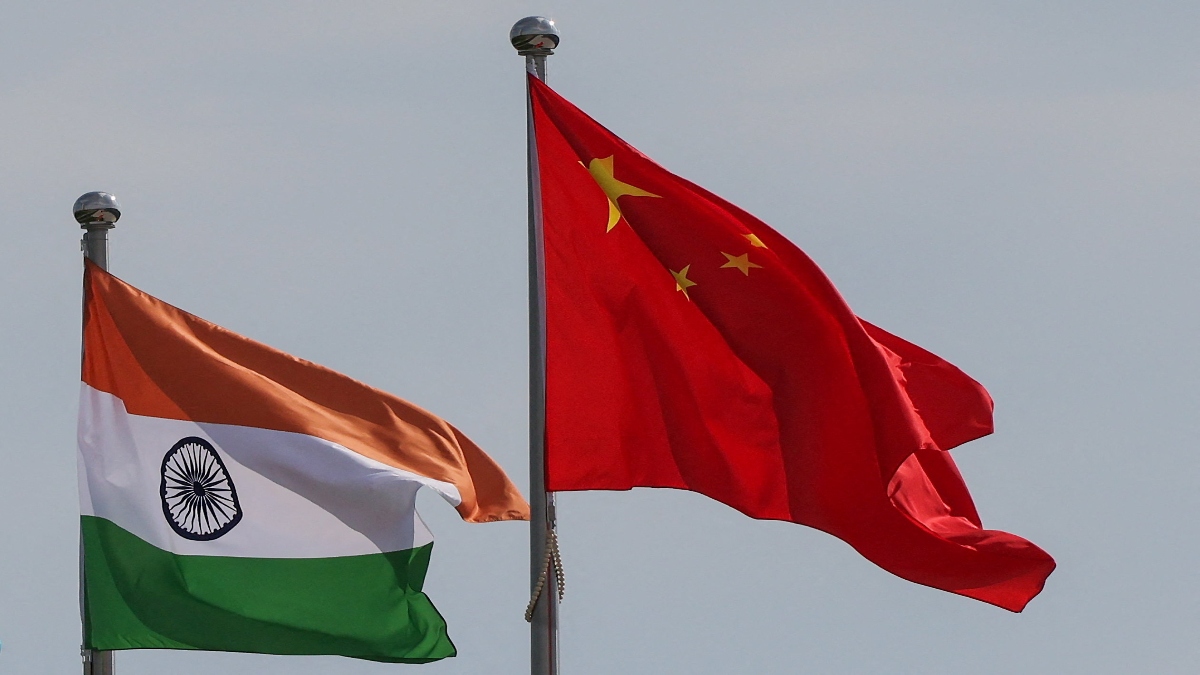)
On Tuesday, yet again, the Chinese Foreign Ministry repeated its theatrics, calling Arunachal Pradesh ‘Zangnan’ and claiming they have full authority to rename “their own territories”.
China’s claim over Arunachal Pradesh has always sounded less like history and more like insistence. Beijing’s claim rests on a surprisingly fragile foundation: a fairly loose imperial association, a selectively remembered treaty, and a modern strategic ambition dressed up as historical grievance.
To understand this, one must begin with the Qing dynasty, which China frequently invokes to anchor its claims. The Qing did exercise suzerainty over Tibet, but suzerainty is not sovereignty. It was a layered, indirect system of influence, reliant on local intermediaries and marked by frequent inconsistencies. Even at its peak, Qing authority in Tibet was uneven. Beyond it, into the eastern Himalayan frontier, it was virtually non-existent.
Empires leave records: administrative orders, taxation systems, military outposts. In Arunachal Pradesh, there are absolutely none that point to sustained Chinese governance. No bureaucracy, no garrisons, no fiscal footprint. What exists instead is silence — both historical and administrative.
Tibet’s connection to the region was still more tangible, but limited. The western tract, particularly around the Tawang Monastery, maintained religious and monastic ties with Lhasa. Tawang functioned as an important centre of Tibetan Buddhism, with some degree of monastic administration and influence over surrounding areas. However, when it comes to influence, especially religious influence, it is most definitely not the same as territorial sovereignty. Beyond this narrow belt, Arunachal remained a mosaic of tribal societies, governed locally and largely untouched by any centralised state.
Even in the foothills, where the Ahom and Chutia kingdoms in present-day Assam and Arunachal Pradesh left cultural imprints, administrative reach was shallow. What emerges from the historical record is not a region governed by Tibet or China, but one defined by the limits of power — geography dictating governance rather than the other way around.
The 20th century did not so much alter this reality as formalise it. At the Shimla Convention, British India and Tibet negotiated the McMahon Line, placing Arunachal Pradesh within British India. China refused to sign the agreement and continues to cite this refusal as proof of illegitimacy.
But this argument, repeated often enough to sound persuasive, collapses under further scrutiny.
By 1914, the Qing empire had already disintegrated in the wake of the Xinhai Revolution. China was politically fractured, consumed by internal instability, and struggling to assert authority even within its core territories. Tibet, in this vacuum, functioned with de facto autonomy, effectively conducting its own diplomacy and negotiating its own boundaries.
China’s absence from Shimla was not a principled stand; it was literally a practical limitation. It lacked both the coherence to negotiate and the capacity to enforce.
And yet, a century later, Beijing invokes that absence as the basis of a claim. This brings us to the real question: if the history is this wafer-thin, why does the claim persist with such intensity?
Because Arunachal Pradesh is not just about history; it is about leverage.
Geography, in geopolitics, is destiny. And Arunachal sits at a particularly sensitive intersection of terrain and vulnerability. From the Tibetan plateau, the land slopes downward into the Brahmaputra valley, one of India’s most densely populated and strategically vital regions. Control over Arunachal would not just shift a border — it would alter the military geometry of the eastern sector. Beijing’s motive is to compress India’s defensive depth while expanding China’s operational advantage.
More critically, it brings into play the Siliguri Corridor, famously called the “Chicken’s Neck”, a narrow, fragile land bridge that connects mainland India to its north-eastern states. At its narrowest, this corridor is barely a few dozen kilometres wide. Any credible military pressure in this region would not merely threaten territory. It would threaten connectivity, logistics, and political cohesion. This is not a theoretical concern. It is a structural vulnerability, and Beijing is painfully aware of it.
Control over Arunachal would place China in a position to apply pressure not just along a contested border, but across an entire region. It would transform a defensive frontier into an offensive staging ground.
There is also a broader regional logic at play. Greater access to India’s north-east enhances China’s proximity to Bangladesh and the Bay of Bengal, key theatres in its expanding maritime and economic strategy. Through Pakistan, via the China-Pakistan Economic Corridor, Beijing already has a western gateway to the Arabian Sea. An eastern vector, even if indirect, strengthens its long-standing objective of strategic access to the Indian Ocean.
Seen in this light, “South Tibet” or “Zangnan” look less like a historical claim and more like a narrative device—a way to normalise what is, at its core, a forward-looking military and economic strategic ambition. And this is where the inconsistency becomes impossible to ignore.
If China’s claims were genuinely rooted in rectifying colonial-era injustices, they would not be so selectively applied. The Qing empire lost vast territories to Tsarist Russia through unequal treaties — territories that remain under Russian control today. Yet Beijing shows no interest or urgency in reviving those claims.
Why?
Because geopolitics is not about historical revenge, it is about strategic utility.
Russia is a partner. India is a rival. Arunachal offers leverage. The Russian Far East does not.
This selectivity is not a contradiction; it is a pattern.
Countries rarely pursue history with moral consistency; instead, they deploy it with strategic intent. The past becomes a toolkit, not a point to be proved or a wrong to be made right.
Even the British understood this when they formalised the McMahon Line. Their objective was not to resolve history, but to pre-empt risk to create a buffer against uncertainties emanating from Tibet and China. It was strategy masquerading as settlement.
China’s approach today mirrors that logic, but with a crucial difference. Where the British sought to stabilise a frontier, Beijing seeks to destabilise one—not because the past demands correction, but because the present offers opportunity.
So, “South Tibet” persists not as a historical truth, but as a political instrument. A phrase repeated in official statements, embedded in maps, and amplified through diplomacy—not to reflect reality, but to reshape it. But sovereignty is not constructed through repetition. It rests wholly on administration, continuity and control, all of which point unequivocally to India in Arunachal Pradesh.
What Beijing presents as a dispute is, in reality, a strategy. And what it seeks is not the correction of the past, but the advantage of the future — which will not be accepted.
May they enjoy their cartographic fantasy as just that. A fantasy.

Comments